Supper Was Never Just Supper: Growing Up in the Shadow of the Detachment
In many RCMP households, the detachment did not end when the member came home. It arrived with the crunch of tires in the driveway, the ring of a telephone after hours, or the low crackle of a radio scanner left on beside the refrigerator. For the children who grew up in those homes, policing was not an abstract institution. It was a schedule, a silence, a move, and a set of lessons about what could be said aloud.
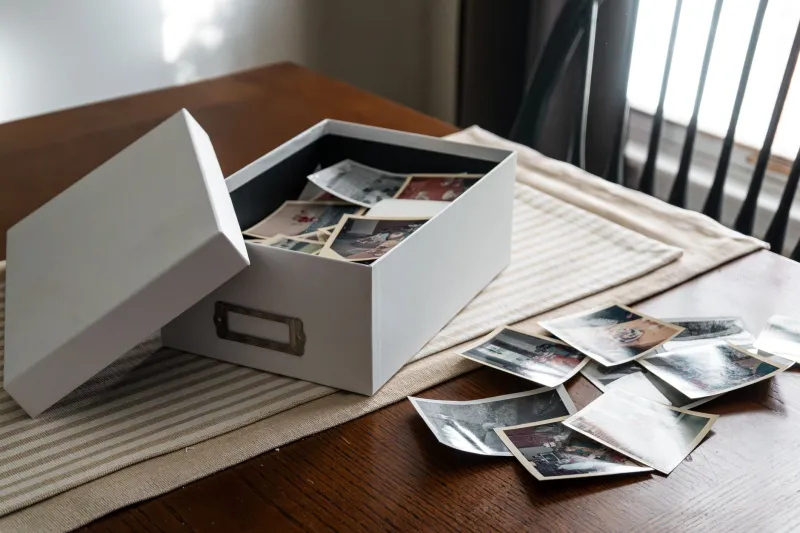
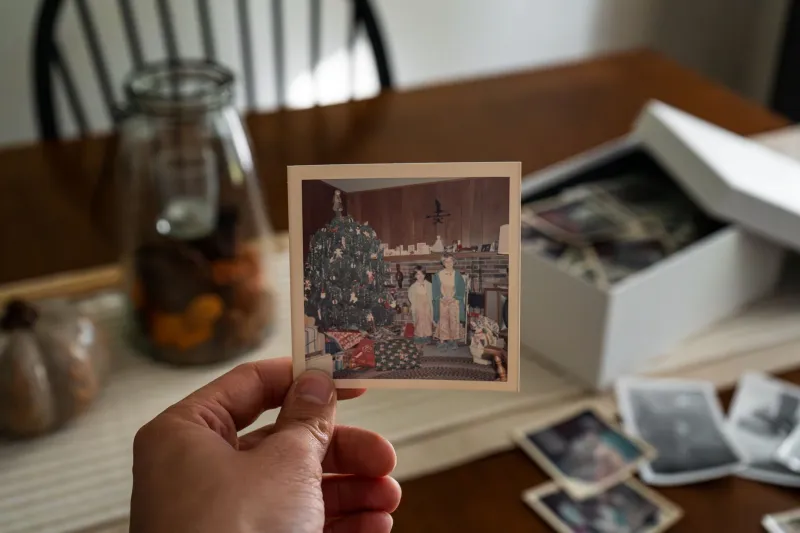
This oral-history feature draws on recollections from adult children of RCMP members, gathered through family interviews and archival photographs. Names are withheld at the request of those who shared their stories. Their accounts do not form a single portrait of Mountie family life. They do, however, reveal a recurring domestic culture—one in which ordinary routines were quietly organised around the demands of the job.
The Scanner as a Household Appliance
For some families, the radio scanner was as ordinary as a kettle. It sat on a shelf in the kitchen or the living room, its volume turned low until a call sign or a change in tone drew attention. Children learned early that the words mattered less than the atmosphere they created. A routine transmission might pass unnoticed. A sharper exchange could end a conversation at the table.
One woman recalled that her father never discussed cases at home, but the scanner made the wider world audible anyway. She described learning to read her father's face rather than the radio traffic itself. Another remembered being told, simply, that some things were not for repeating. The rule was rarely explained in detail. It was understood as part of living with someone whose work involved other people's private difficulties.
That discretion was not only secrecy. In many homes, it was presented as a form of respect—for victims, for colleagues, and for the communities the member served. Children absorbed the principle without always having the language for it. They knew which questions to avoid and which names never to mention at school.
The Posting Calendar
The RCMP posting system gave family life a particular rhythm. Transfers could arrive with little warning, turning ordinary months into a period of packing, goodbyes, and unfamiliar schools. Adult children describe learning to hold friendships lightly, or at least carefully. Some became expert at introductions. Others grew wary of them.
A man who spent part of his childhood in Prairie detachment towns remembered the family calendar as provisional. A posting might last a few years or much longer. Plans were made, but not too far ahead. The household learned to live with the possibility that the next move was already being discussed somewhere else.
These moves were not always dramatic. Many were simply tiring: new bedrooms, new bus routes, new neighbours who already knew what the parent did for a living. In small communities, the member's role could precede the family. Children sometimes arrived at school already marked as the Mountie's kid. That label could bring trust, suspicion, or teasing. It rarely brought anonymity.
Dinner as Debrief—and as Performance
The dinner table was where the public and private sides of the job met. A member might come home exhausted but still carry the day's tension. Children learned to gauge whether conversation was welcome. In some homes, supper was lively. In others, it was quiet by design.
Several recollections point to a kind of domestic performance. The red serge might hang in a closet, but the authority attached to it did not disappear. Parents could be firm about behaviour in ways that seemed connected to their work. Children noticed the difference between the parent who coached hockey on Saturday and the parent who had spent the week responding to calls. They learned that authority had a public face and a private cost.
Yet the table was not only a place of restraint. It was also where children heard fragments of adult conversation about fairness, danger, and community obligation. Those fragments shaped their ideas about law and order long before they studied the subject formally. Some came to admire the work. Others came to question it. Many felt both things at once.
Friendship with a Border
In larger cities, a parent's job might remain mostly invisible. In smaller communities, it followed the family into grocery stores, arenas, and school parking lots. Children of Mounties describe a border around friendships that was difficult to name. Friends might ask for information, or joke about getting out of a ticket. Some children learned to deflect such comments early.
There was also pride. A parent in uniform was a figure of curiosity and occasional celebrity. But pride came with expectation. Children felt they should behave well, not only because their parents said so but because the community was watching. That pressure could be mild or heavy, depending on the town and the era.
What the Stories Reveal
The oral histories are not nostalgia pieces. They show the emotional labour that policing places on families, and the way domestic life becomes part of an institution's culture. A scanner on a counter, a posting notice on a fridge, a rule about what not to repeat—these are small details, but they are also evidence of how the job was transmitted across generations.
Some adult children followed a parent into the RCMP. Many did not. Almost all describe carrying certain habits: caution with information, alertness to tone, and a complicated respect for authority. Their stories suggest that the history of Canadian policing is not kept only in files and detachments. It is also kept in kitchens, where supper was never just supper.