From Sled Trail to Scent Line: How the RCMP Learned to Read a Dog's Nose
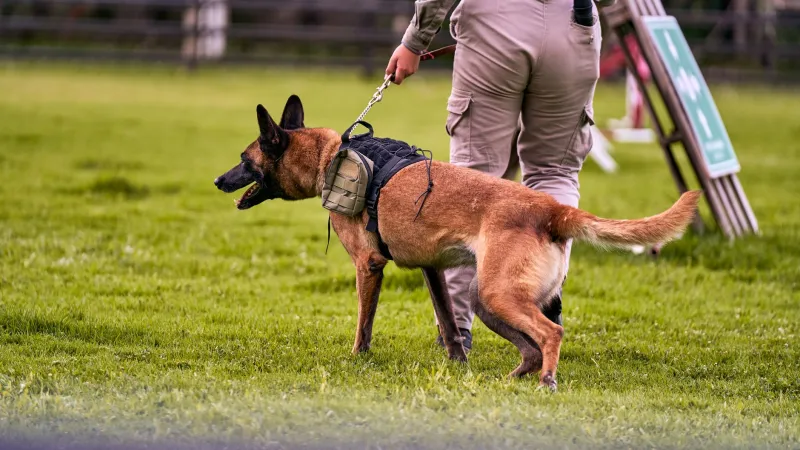
There is a particular sound in a training yard in the early morning: a handler's low voice, the click of a lead, and the patient breathing of an animal that has been asked to do something difficult and has decided, for reasons of its own, to cooperate. Anyone who has spent time around the RCMP's dog program will tell you that the sound is the least important part. What matters is the record that follows — the notes, the logs, the certifications, the chain of custody that turns a nose into a piece of evidence a court will accept.
Where the Leash Meets the Ledger
The Force's use of working dogs is commonly dated to the late 1930s, when the Mounted Police began acquiring animals for patrol and tracking duties in terrain where a horse, a vehicle, or a radio call could not close the gap. That origin story is often told as a romance: the constable and his dog against the northern distance. The archive tells a drier story. It tells of budgets, breeding decisions, veterinary opinions, and long arguments about whether an animal's alert constituted information or merely a hunch.
Those arguments are not antique. They are the reason every modern RCMP service dog arrives with documentation as thick as its training file — provenance, health history, temperament assessments, and the handler's own certification records. The dog is an investigator. It is also, administratively speaking, a witness whose testimony must be corroborated.
The Long Apprenticeship
Training practice evolved in three broad movements, each shaped less by enthusiasm than by necessity. The first was patrol support: tracking, guarding, and the simple deterrent value of a large animal at a roadside stop in a place where backup was an hour away.
- Patrol and tracking. Early handlers worked largely by instinct and regional custom. Instruction was passed from officer to officer, and standards varied from detachment to detachment.
- Specialist detection. As demand grew for searches involving explosives and, later, illicit substances, the training became formalized: dedicated courses, standardized testing, and a national expectations document that handlers could be measured against.
- Forensic integration. The most recent chapter is the least romantic and the most consequential. Scent-line work, cadaver searches, and cold-case recoveries now sit inside an evidentiary framework in which the dog's indication is one data point among many.
Each of these movements required the same uncomfortable concession: the animal's ability had to be translated into language the institution could defend. A handler who says "he found something" is describing an experience. A handler who says "the dog gave a trained final response at this location, at this time, under these conditions, and here is the corroborating find" is describing evidence.
Scent Lines and Cold Ground
The phrase most often used by veteran handlers is not "search" but "conversation." A dog working a scent line is not scanning a field so much as negotiating with it — reading air, ground, disturbance, and the thousand small disturbances people leave behind without noticing. In cold-case work, that conversation can take place decades after the fact, in a field that has been ploughed, built over, or simply forgotten.
Handlers are careful about what they promise. Scent can locate an area of interest; it cannot identify a person, date an event, or explain motive. The dog narrows the question. Investigators and, eventually, courts answer it. When the two halves of that process are conflated — when a dog's interest becomes a conclusion — the file weakens, and so does the credibility of every handler who follows.
That is a lesson the program has learned more than once, and it explains the current emphasis on documentation. Records are not bureaucracy for its own sake. They are how a very old, very practical skill survives contact with a very modern standard of proof.
The Handler's Half of the File
Ask handlers what they remember and they rarely start with the cases that made the news. They start with the animal. A dog that worked a northern detachment for six years, that knew the sound of a specific truck, that would not settle until the shift ended. They talk about the day the partnership ended, and about the quiet that followed.
The bureaucracy rarely captures that. It captures the certifications and the deployment logs. It does not capture the fact that for most of a service animal's career, the handler's judgement is the real instrument, and the dog is the one that keeps the judgement honest.
Nor does it capture the cost. Handlers speak of the strain of being on call with a partner who cannot be left with anyone else, of the difficulty of reassignment after a dog retires, of the particular grief that comes with an animal that was, in every institutional sense, a colleague.
What the Institution Owes the Bond
A serious question sits under all of this, and it is not sentimental. If the program depends on a relationship, then the institution has an obligation to protect the conditions that make the relationship possible: reasonable deployment schedules, proper veterinary care, retirement planning, and a training culture that treats handlers as professionals rather than as equipment operators.
The RCMP's dog program is one of the most recognizable things the Force does. It is also one of the most quietly technical. The red serge and the dog on the tarmac make for a photograph; the training log and the scent line make for a case. Both matter, and neither is sufficient alone.
A century on, the nose is still the beginning of the story. The file is what finishes it.